Posted in Uncategorized

Bareroot Berries & Grapes

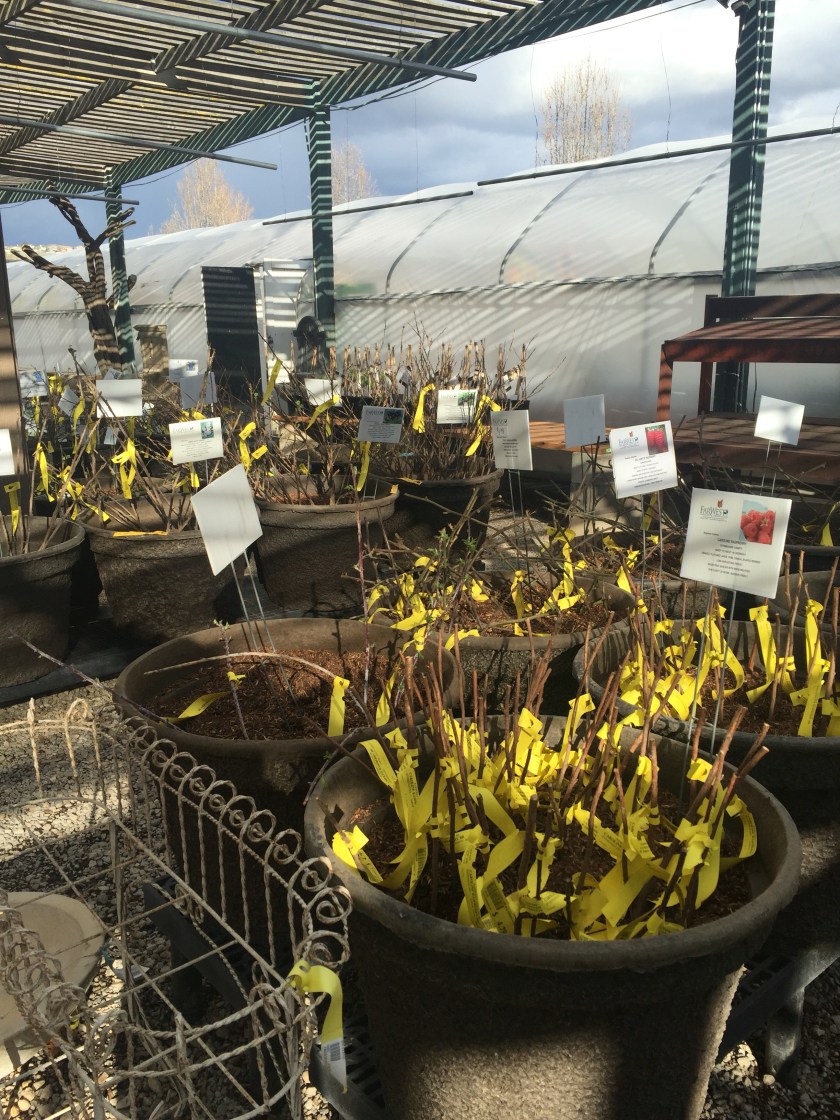
img_6048Every year Dennis Fix, the owner of FarWest nursery travels to Oregon to bring back some great varieties of raspberries, marion berry, black berry, currants, gooseberries, and grapes.  This is how I got my berry garden started and now I have berries from early summer until the fall.

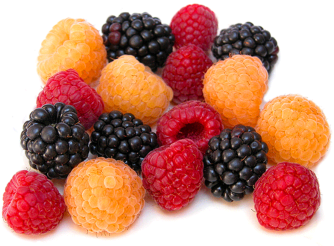
The raspberry varieties there go from early (end of June) to fall.  Read the labels and select ones from different ripening times.  Example:  Early ones: Latham, Caroline Mid Season: Boyne, Ever bearing: Amity, Fall: Heritage and Fall Gold.  The golden raspberries are my favorite now.  I love their flavor.  I also tried Black Munger, but I did not like them.  They are very dry and seedy.
Screen Shot 2016-03-17 at 9.47.29 PM

I got some thornless blackberries there last year and they have big berries that are tasty once they ripen.  These blackberries do not take over like the ones you see on road sides.  They are easier to maintain.  Once I got these plants established, I took cutting of them to help create more plants in my row.  I did this by cutting off some of the stem in the winter when they are dormant and sticking them into the soil with 1-2 buds under the soil.  Where the buds are is where roots will come out to bring the cutting to life.  It is a nice way to create a row of the berries that you like best.

Crandall Current is a favorite.  These bloom early and the yellow flowers smell like clove.  Then, the berries come on and are big, dark blue and juicy.  Other currents are small and tedious to pick, but these are easy pick and tasty.

Check out FarWest soon as they seem to sell out of these quickly. Try to get your bare root berries in the ground before they leaf out.

Word of warning.  When planting raspberries, marion and blackberries be aware that these plants will spread by runners underground.  This can be beneficial if you are trying to get a berry patch going, but it can also be very problematic if you plant these in a bad spot.  An example of a bad spot would be close to a fence and a neighbors yard, where the berries will go under and spread into parts of your neighbors yard where they may not want them.  Plant them in a place where you and other people will not have to constantly be digging them out.  It is easy to plant them, but really hard to remove them, so be careful.  If you can, plant them in a row, where you can easily walk to pick them and trellis them up as needed.

Currants are more of a shrub and so they can be planted anywhere, even as an ornamental in a garden bed.  They are pretty and you can enjoy them and eat their berries.  They will not spread like a raspberry.


Posted in What should I be planting now?

St. Patrick’s Day Peas

Screen Shot 2016-03-17 at 12.42.59 PM

If you talk to people who have been gardening in Boise for a long time, many will tell you that St. Patrick’s Day is the day to plant PEAS in Boise.

Carol McCord taught me many years ago that St. Patrick’s day was the day to plant peas.  For several years, when I had the honor to visit Carol and her beautiful garden,  I always admired her healthy looking peas that were already coming up, before mine had even been planted.  “When do you start your peas?”  “Always on St. Patrick’s day.” She would say.   “That is when mom always planted them and I plant them on that day.  It is a tradition.”  She would also add wood ash from her fire place to the soil months before,  soak the seeds over night and add some inoculant the hole when she planted them.  She always beautiful peas and before it got too hot in the summer.  Once it is hot, peas become very unhappy.

Peas are amazing.  They are one of the best vegetables to eat straight out of the garden.  There is nothing like walking up to a pea plant and pulling a pea off the vine and eating it.  Peas in the garden could teach any child to love vegetables!  Not only are peas out of the garden delicious, but they add nitrogen to the soil.  Nodules of nitrogen can be found on their roots, which should be left in the soil after the peas are done and used to feed other plants.  Peas are actually a good cover crop to replenish the soil after something that uses a lot of nitrogen has been planted there.  I currently have peas growing in the raised beds of my greenhouse to help replenish the soil. (I planted them early because they are in a greenhouse and being used as a cover crop)

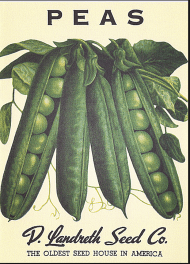
There are 3 kinds of peas, Snap, Shelling and Snow and many different varieties within these groups.  For kids and the ones I always plant now are:  SNAP!

Sugar Snap peas: You can eat the pod and the peas and they are very sweet! Shelling Peas: You must remove the pod and just eat the peas.  You can chew on the pod, but it is very fibrous.                                                                                          Snow Peas:  They are flat.  You can eat the pod and the peas inside, but the peas are very small.  These are not as sweet as Snap peas.

To Plant Peas:

  • Look on the seed packet to see “DAYS to HARVEST” to see the amount of days they will take to fruit.  This ranges from 50 days to 70+ days.  If you can find one with fewer days like ‘Sugar Ann’ – 52 days, you will have peas sooner and you avoid them trying to grow in the heat.  Peas are a cool season crop so once it gets hot they tend to stop growing and go dormant.  The peas themselves change flavor from sweet to dry and sour.  So go for a low amount of days!   The 52 day count starts after the plant is up and out of the ground, not the day you put the seed in.  You can add the days to germinate to get a better idea of when you might have peas.
  • Soak your pea seeds the night before you plan to plant them by putting them in a bowl of room temp. water.
  • Seeds like to be planted only as deep as they are big, so you can either use a stick or your finger to plant them in the ground 1/2″ deep, or you can dig a row, put the peas in 4″ apart and cover with 1/2-1″ soil.  If you peas will need trellising, plant them near a trellis or a plant where you can create a trellis behind them.  I like to plant them where it will be easy to sit and pick them, so I usually plant them along the edge of a bed, where they will be easy to get to.
  • Put the inoculant in the hole with the peas.
  • Rain should water them in at this time of the year, but watch them. You don’t want new seedling drying out.  On the other hand you don’t want them too wet.  To test how wet the soil is, take a hand full  of soil.  Squeeze it in your hand.  The soil should stay together nicely, but not be dripping with water TOO WET.  It should not fall apart too easily either, TOO DRY.  It should just make a nice, fragile ball in your hand.

Pea greens & flowers can be eaten and are delicious.  Some times, when I just can’t wait another day for the peas to be there, I cut the greens and put them in a salad.  The greens have the same taste as a pea.  When you cut them you run the risk of cutting off blooms where the peas will be so now I designate a few plants at the end of my row that can be cut for their greens.


Posted in Goat tales

Goats: Frida and Diego

In October of 2015, I walked my goat Frida on a leash down to my neighbor’s house.  I wanted her to meet Boo the little black cashmere buck my neighbor’s had, before neutering him.  Boo immediately followed Frida around and continued to follow her the whole month she was there.   My neighbors started calling him Diego.

A goat’s gestation period is 150 days and I read all kinds of things that said that I would not be able to tell if my goat is pregnant.  Well, I can tell….She is.  She is very wide and her udder is huge.  Especially if I compare her to the other female goat I have.

It looks like Story Book Farm will finally have baby goats!  I will keep everyone posted as the due date could be any day now.  Baby goat spring celebration to follow.

Hellebore, Lenten Roses

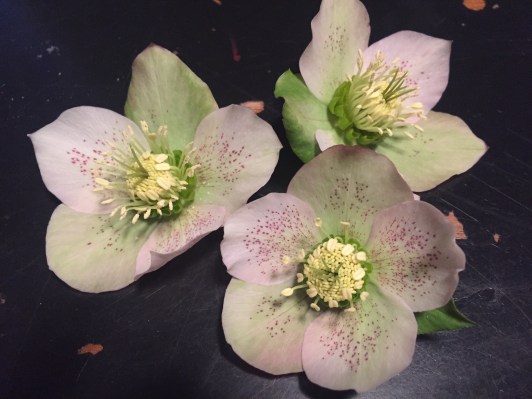
I can never believe how early Hellebores bloom and for how long.  Mine started in February and are now in full bloom.  They will probably continue for another month or more.  I can cut them and bring them inside and they last well in a vase.  They are beautiful.

I have two kinds and there is a big difference.  One of them has very upright flowers and the other plant has flowers that droop.  The one that has the upright flowers is much preferred because the beautiful flowers are visible when they bloom and they do well in a bouquet.  The other plant’s flowers droop on the plant and in a vase.  When you purchase a Hellebore look for upright flowers like ‘Ivory Prince’.  There are many to choose from that vary in color and in size.  ‘Pink marble’ has little pink delicate flowers.  To see many different varieties go to:  http://www.whiteflowerfarm.com/index.php?page=seek&id%5Bm%5D=pattern&id%5Bq%5D=helleborus

Only a fairy would enjoy these droopy hellebore.  They are beautiful when you lift them and look in at their little freckles.

img_6052

The perfect flower for a botanical drawing or painting.  Wow.

Posted in Garden Art Projects

Stepping Stones

“Getting ready for the garden tour?” a friend asked me.

Yes. I am painting stepping stones.  I used an Americana acrylic paint that I have used to decorate jeans and washed and washed them and it doesn’t wash out.  I also used it on some wooden hearts that are outside and my Story Book Farm sign.  So, I am hoping it will last.  Mostly it was just fun, so if I had to redo them, it would be ok.

It helped a lot to use a compass and draw circles on the pavers to follow.  To make the dots I used a pencil eraser, a chop stick, a paint brush and a the end of a thick glue stick.  I can’t wait to put these out in my garden.

Posted in Garden Art Projects, What's blooming?

A Time to Blossom

Spring is a time to renew, and grow with our plants and  blossom.  It is a time I get excited and think that I will, this year, be able to keep up with the weeds and the work that gardening entails.  Time to put all those winter plans into action.    The weeds come up slowly in the spring as if to tease us and make it seems easy, then suddenly the seeds that were hiding on the surface of the soil all sprout and say “Hula hoe me now” or forget it.  The hula hoe comes out and I feel in charge, but then they begin to pop up everywhere and the next thing I know they are 2-3 feet tall and almost impossible to pull out.  The dance begins.

The real fun of spring though is all the blooms.  For several years I have wanted to create a blog where people can go to see what is blooming.  This year I hope to document the progression of blooms in Boise, Idaho.

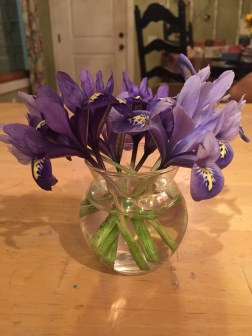
The first things that popped up in my yard this year were the Arctic Iris.  I got them at Edwards Greenhouse.  I had gotten them as a forced plant several years ago, enjoyed them in my house in a planted basket with other spring forced flowers and then planted them in the ground.  Every year those iris
pop up to let me know that spring is on its way.  “Get ready!”

img_5913

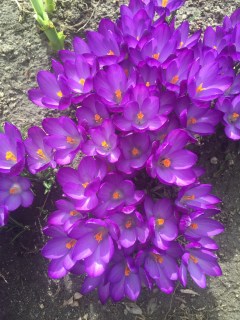
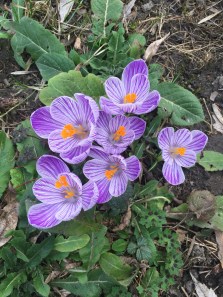
Then, crocus.  The crocus were so pretty this year.  They welcomed me home by popping up by my front gate and along the front of my house.  They bloomed in a large purple mass out back, so as I sat staring out the window, I could see them.  They popped up in a friend’s front lawn.  And then it began to rain and they all disappeared, making way for the next flowers; the daffodil.

image


img_5910

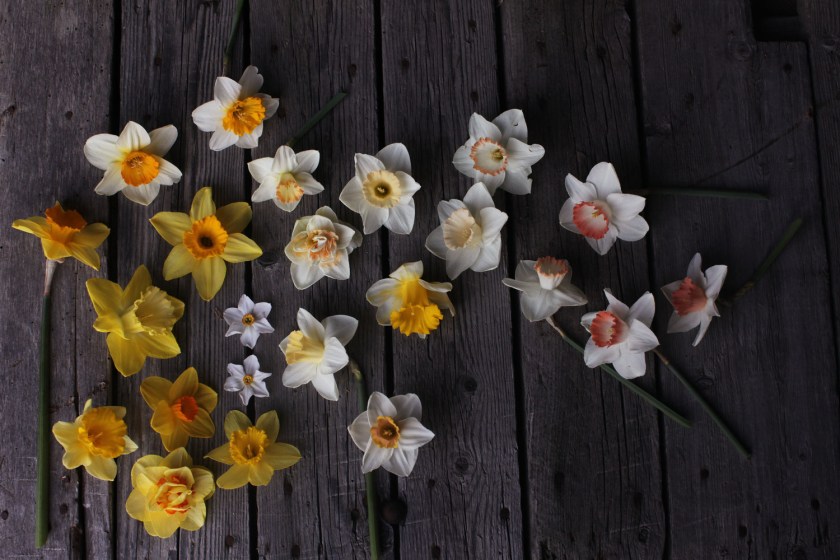
I kind of had forgotten that last summer I made the effort to plant a whole row of traditional yellow daffodils along the side of my house where I often don’t go, but had some open space.  They wrap around the corner to where I turn on the hose, so I noticed them and couldn’t believe their beauty when I went around the corner to see them.   Solid yellow daffodils must be the early ones because the fancy, fragrant ones, like in the photo below have not yet bloomed.   Half the row is blooming, while the other half awaits.  Did I plan this, no, but it worked out great having the end be a little more shady and therefore allowing one section to bloom while the others wait.  A perfect sequence for a cut flower gardener.

Daffoldils

This photograph is from the Little Flower School, one of the inspirations for my farm. http://littleflowerschoolbrooklyn.com/journal/

Please be sure to check back for more information on what is blooming, what to plant and more photographs of things that you might see in Boise, Idaho in the spring.